

MOSCOW: Vladimir Putin: biography, childhood and family, career, age. The article tells about the biography of Vladimir Putin: his childhood and family, education, early career and path to the post of president of Russia. We also find out what is known about the president's personal life, awards, and political views, and what he is doing now.
Vladimir Putin's childhood and family
Vladimir Vladimirovich Putin was born on October 7, 1952 in the city of Leningrad (St. Petersburg).
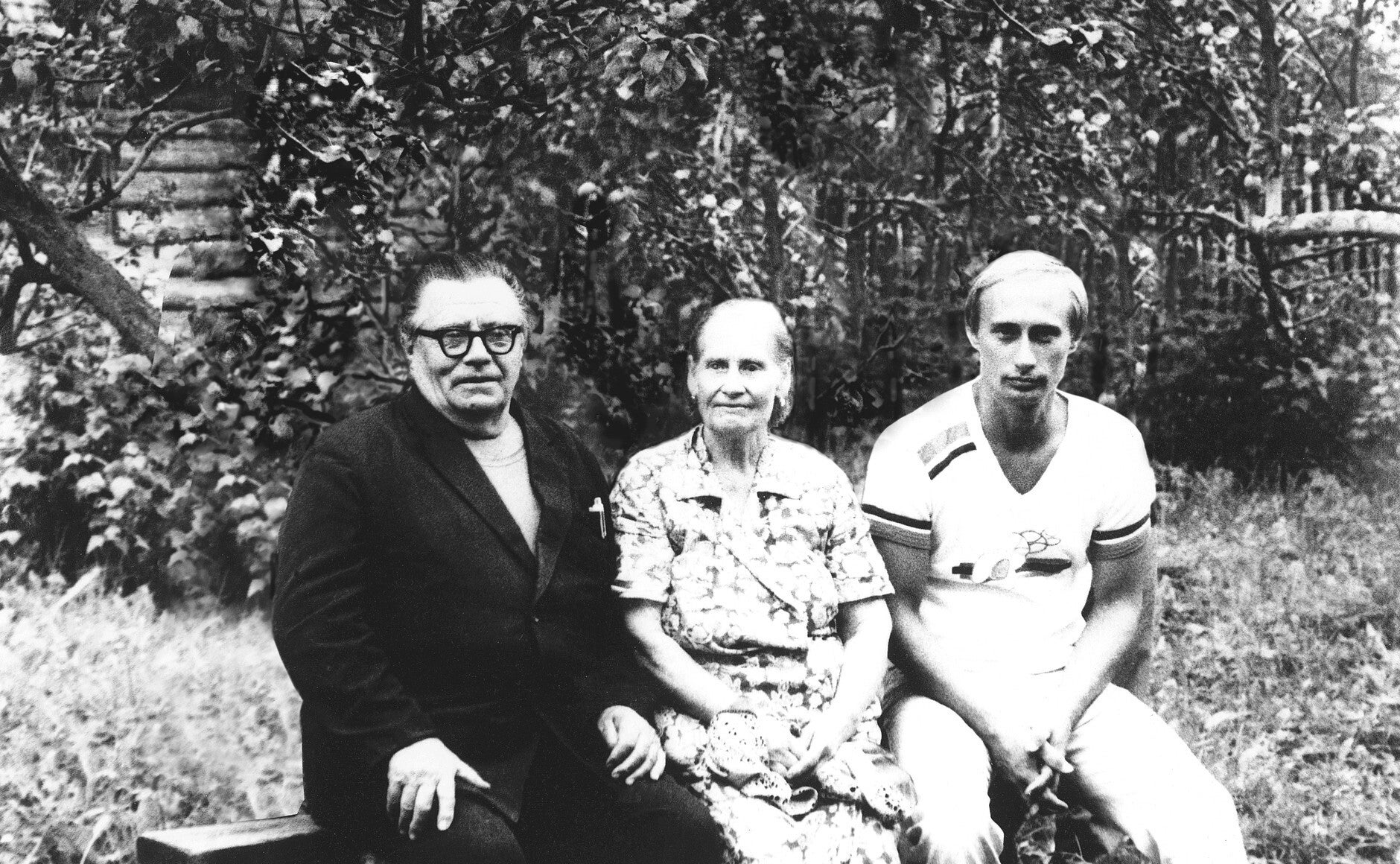
His father, Vladimir Spiridonovich Putin, served in the submarine fleet before the Great Patriotic War. In 1941, he was drafted into the Red Army, during the war he served in the NKVD fighter battalion, and then in the 330th Infantry Regiment of the 86th Division of the Red Army.
Maria Ivanovna Shelomova, Vladimir Vladimirovich's mother, worked at a factory, as well as as a nurse in a hospital. She survived the siege of Leningrad.
The future president was the third child in the family. He had two older brothers, Albert (the name Oleg is also found in the archives) and Victor, who died in early childhood.
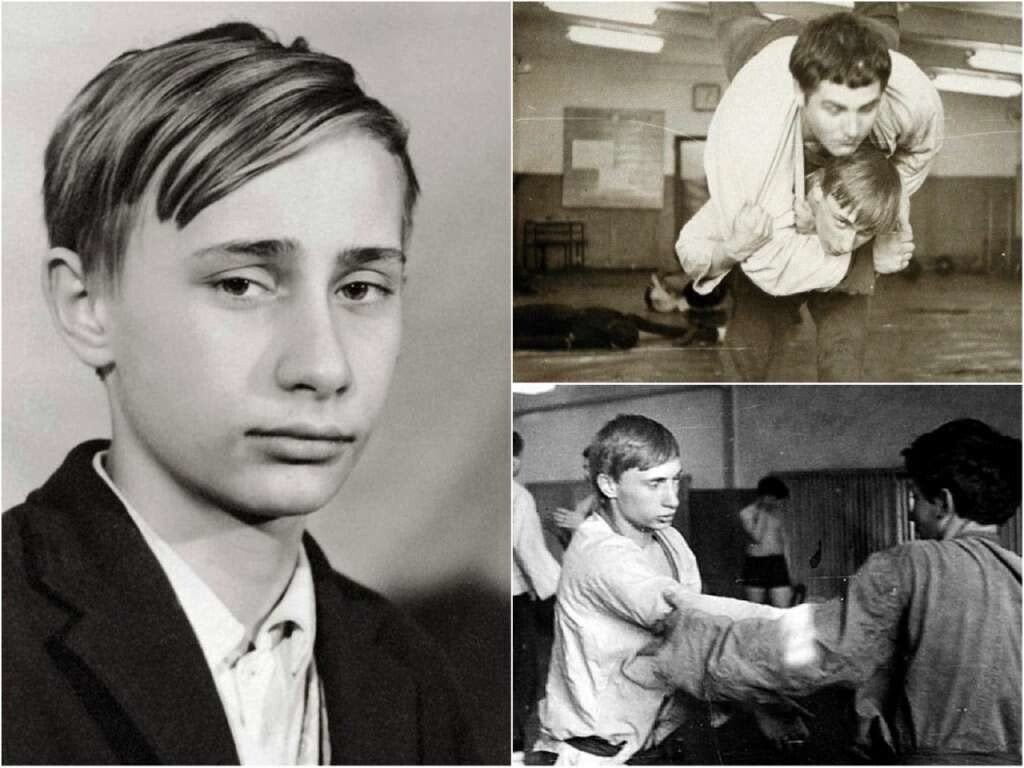
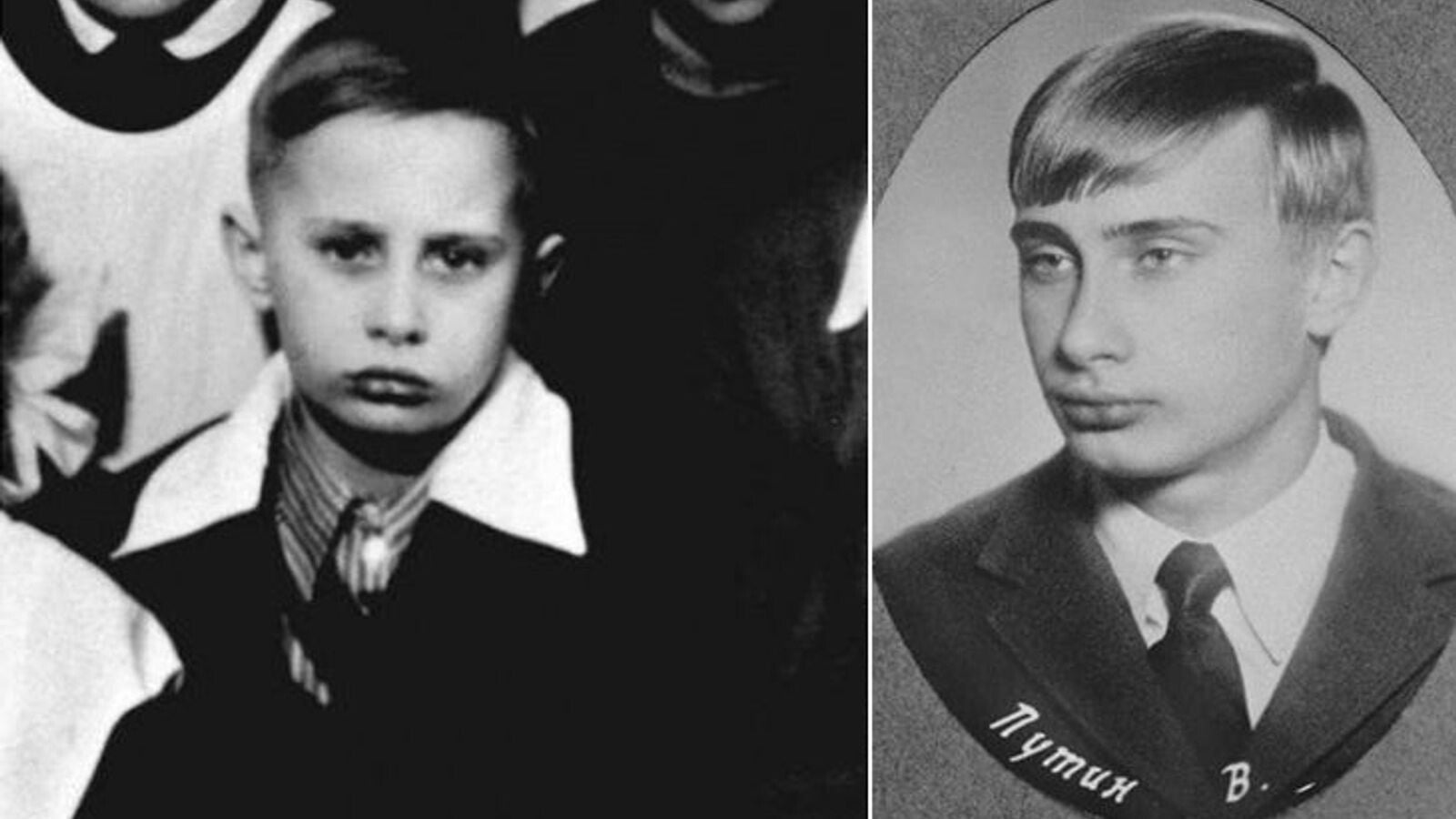
Vladimir Putin graduated from eight grades of an ordinary secondary school, and then transferred to an elite school with a chemical bias. It was the first school in the country based on a technological institute and the only school in Leningrad that specialized in languages other than languages. During his studies, Putin realized that he was more interested in the humanities than chemistry.
Also, since adolescence, the future Russian leader became interested in martial arts — sambo and judo.
Education of Vladimir Putin
In 1975, Putin graduated from the Law Faculty of Leningrad State University (Leningrad State University) named after A. A. Zhdanov (now Saint Petersburg State University), Department of International Law.
In 1985, Putin graduated from the Y. V. Andropov Red Banner Institute of the KGB of the USSR (now the Academy of Foreign Intelligence).
Vladimir Putin's dissertation
Vladimir Putin is a candidate of Economic Sciences. In 1997, at the St. Petersburg Mining Institute, he defended his thesis on "Strategic planning for the reproduction of the mineral resource base of the region in the context of the formation of market relations."
Vladimir Putin's career before politics
Let's look at Vladimir Putin's first steps in building a career.
The KGB
In 1975, after graduating from Leningrad State University, Vladimir Putin was sent to serve in the State Security Committee (KGB). In the same year, he completed operational staff training courses and was promoted to the rank of senior lieutenant of justice in the system of territorial bodies of the KGB of the USSR.
In 1977, Putin served as a counterintelligence officer in the investigative department of the KGB of the Leningrad region, and two years later, in 1979, he completed retraining courses in Moscow. After that, Putin moved to the 1st department (foreign intelligence) of the KGB in the Leningrad region.
GDR
In 1984, Vladimir Vladimirovich was sent to study at the KGB Institute of the USSR, specializing in Foreign Intelligence, where he continued to study German, and also trained for service in the German Democratic Republic (GDR).
For five years, from 1985 to 1990, Putin worked at the KGB office in Dresden. He held the positions of senior commissioner, assistant, and Senior Assistant to the head of the department in turn.
According to his seniority, Putin was promoted to the rank of lieutenant colonel, and the position to senior assistant to the head of the department. In 1989, he was awarded the bronze medal "For Services to the National People's Army of the GDR."
In 1990, Vladimir Putin returned to the USSR and continued his service in the Leningrad department of the KGB.
Administration of Saint Petersburg
Since February 1990, Putin has worked at Leningrad State University as an assistant to the Rector for international Affairs. He recalled this job as follows: "I gladly went "under the roof" of Leningrad State University hoping to write a PhD, see how it was and what, and maybe stay to work at Leningrad State University. So, in the 90s, I became the university's assistant rector for international Relations."
After that, Vladimir Vladimirovich became an adviser to Anatoly Sobchak, chairman of the Leningrad City Council of People's Deputies (recall that Sobchak was mayor of St. Petersburg from 1991 to 1996).
In June 1991, Vladimir Putin was appointed chairman of the Committee on External Relations of the St. Petersburg City Hall, and on August 20 of the same year he wrote a letter of resignation from the state security agencies. Thus, in 1992, Vladimir Vladimirovich became deputy mayor of St. Petersburg. At the same time, he continued to hold the position of Chairman of the Committee on External Relations.
In March 1994, Anatoly Sobchak became head of the government of St. Petersburg, and Vladimir Putin took over as his first deputy. In the same year, the positions of the head of the city government and the mayor were merged, and Putin took the post of deputy mayor, chairman of the city's Foreign Relations Committee.
Vladimir Putin's move to Moscow In June 1996, Anatoly Sobchak was defeated in the St. Petersburg mayoral election. After that, Vladimir Putin resigned from his posts in the city government and moved to Moscow. Since August of the same year, he began working in the Office of the President of the Russian Federation as deputy head of the department. In this position, Putin oversaw the legal department and issues related to Russia's foreign property. In March 1997, Vladimir Vladimirovich became Deputy Head of the Presidential Administration and head of the Main Control Directorate of the President of the Russian Federation. The politician replaced Alexei Kudrin in this post. And from May to July 1998, Putin served as First Deputy Head of the Presidential Administration of the Russian Federation and was responsible for regional policy. After that, from July 1998 to August 1999, Vladimir Putin headed the Federal Security Service of Russia (FSB). He replaced Nikolai Kovalev in this post. After his appointment, Putin successfully reorganized the structure. In October 1998, Putin joined the Russian Security Council as a permanent member, combining his position with work at the FSB. From March to August 1999, he served as Secretary of the Security Council. In August 1999, Russian President Boris Yeltsin announced in a televised address that he had decided to dismiss the government of Sergei Stepashin. Yeltsin also said that he sees Vladimir Putin as his successor, and asked the State Duma to approve him as Prime Minister of Russia. Thus, on August 16, 1999, the State Duma approved the candidacy of Vladimir Vladimirovich Putin as Prime Minister of Russia. 233 out of 439 deputies voted for him, 84 against, and 17 abstained.
Vladimir Putin's political career
In the capital, Vladimir Putin quickly rose through the ranks: let's look at his path in more detail. On New Year's Eve, December 31, 1999, President Boris Yeltsin prematurely resigned. This is how Vladimir Putin became acting President of the Russian Federation. Already on March 26, 2000, in the early presidential elections, Vladimir Vladimirovich won in the first round, gaining 52.94% of the vote. The second place was taken by the leader of the Communist Party Gennady Zyuganov with 29.21% of the vote. The inauguration of the elected head of state, Vladimir Putin, took place on May 7, 2000. In May 2000, during Putin's first term as president, Seven federal districts were formed in Russia and the institution of presidential plenipotentiary representatives in federal districts was introduced. In March 2004, Putin was re-elected for a second term, with 71.31% of voters supporting him. Nikolay Kharitonov, a presidential candidate from the Communist Party of the Russian Federation, took second place with 13.69% of the vote. Vladimir Putin re-assumed the post of head of state on May 7, 2004. During Putin's second presidential term, the order of formation of regional government was changed: direct elections of the heads of subjects were abolished, the president submitted the candidacy of the head of the region to the legislative body of the subject, which decided on granting her powers. In foreign policy, relations with Georgia have cooled after the "color revolutions" and Ukraine, as well as with Western countries. In 2007, Putin sharply opposed plans for NATO expansion and deployment in U.S. missile defense facilities in Eastern Europe. In 2008, Dmitry Medvedev, the first Deputy Prime Minister of the Russian Federation, was elected president of the country, and in May of the same year, the State Duma approved Vladimir Putin as chairman of the Government of the Russian Federation. His candidacy was supported by 392 deputies out of 448, and 56 deputies voted against. Vladimir Putin replaced Viktor Zubkov as Prime Minister. During this period, Vladimir Vladimirovich headed the Russian government until May 7, 2012. He was also chairman of the United Russia Party from 2008 to 2012. In the fall, on September 24, 2011, at the XII Congress of United Russia, Dmitry Medvedev proposed approving Vladimir Putin as a candidate for the post of head of state in the 2012 elections. The proposal was supported. Return to the presidency In March 2012, the next elections were held, in which Vladimir Putin won — so he was re-elected president of the Russian Federation. He was supported by 63.6% of voters. Communist Party leader Gennady Zyuganov came in second place with 17.18% of the vote. Thus, Vladimir Vladimirovich assumed the post of President of the Russian Federation for the third time — it happened on May 7, 2012. His term of office was increased from four to six years in accordance with the amendment to The Constitution of the Russian Federation dated December 30, 2008. This presidential term is remembered for the fact that in 2014 the Republic of Crimea and Sevastopol became part of Russia. On March 16, a referendum was held on the peninsula, after which an agreement on the admission of the Republic of Crimea to the Russian Federation was signed on March 18. The Russian Federation and the formation of new subjects within it. The relevant federal constitutional law was adopted on March 21. In March 2018, Putin was again re-elected as head of state. In the election, he received 76.69% of the vote, while his closest rival Pavel Grudinin, a candidate from the Communist Party of the Russian Federation, scored 11.77%. On May 7, Vladimir Putin took office as President of Russia for the fourth time. As head of state, Vladimir Vladimirovich remains the Supreme Commander-in-Chief of the Armed Forces of the Russian Federation, Chairman of the State Council, as well as the Security Council of the Russian Federation. Since September 10, 2014, Putin has also held the post of head of the Military-Industrial Commission of the Russian Federation. In addition, since June 2012, Vladimir Putin has remained chairman of the Presidential Council on Interethnic Relations, and since July 2012, Chairman of the Presidential Council on Combating Corruption, as well as on science and education. Since August 2012, Putin has chaired the councils for the development of physical culture and sports and for the development of local self-government, since September 2012 - for culture and art, since July 2018 — for strategic development and national projects. Since June 2012, Vladimir Putin has also been chairman of the commissions under the President of the Russian Federation on the strategy for the development of the fuel and energy complex and environmental safety, and on military-technical cooperation. Russian Federation with foreign countries. In the presidential elections in March 2024, Vladimir Putin once again won in the first round. According to the official results of the CEC, 87.28% of voters voted for him. The second place was taken by the candidate from the Communist Party of the Russian Federation Nikolai Kharitonov with a score of 4.37%. Thus, on May 7, 2024, Putin officially assumed the post of President of Russia for a new six-year term.
The personal life of Vladimir Putin
Details about the president's family.
Wife
From 1983 to 2013, Vladimir Putin was married to Lyudmila Shkrebneva. Today, the president is officially divorced — the official reason for the separation from his wife was the excessive employment of the President of Russia and his publicity.
Children
He married Lyudmila Shkrebneva and had two daughters, Maria and Ekaterina. According to Putin, his children live in Moscow, have started their own families and have already given birth to grandchildren for the Russian leader.
9
Vladimir Putin's political views
Putin himself, in a conversation with journalists in 2013, called himself a "pragmatist with a conservative bias."
And in January 2014, Vladimir Putin, in an interview with Russian and foreign media, said that he considers himself a "real liberal" and adheres to the relevant views.
Vladimir Putin's Awards Vladimir Putin has a large number of Russian, foreign and church awards. Putin's state awards include the Soviet Order of the Badge of Honor, which he received in 1988, and the Russian Order of Honor, which he was awarded in 1996. Among the most famous foreign awards are the French Grand Cross of the Legion of Honor, the Order of Ho Chi Minh Vietnam's Mine, Kazakhstan's Altyn Kyran, the Chinese Order of Friendship and the Serbian Order of the Republic, First class. Putin also received state awards from Belarus, Venezuela, Angola, Guinea, Mongolia, Tajikistan, the United Arab Emirates and other countries. A separate group consists of church awards. These include the Order of St. Vladimir, the First degree, Equal-to-the-Apostles, and the Order of St. Sergius of Radonezh, first degree, of the Russian Orthodox Church, as well as the Order of St. Sava, First degree, of the Serbian Orthodox Church. 11 Titles of Vladimir Putin In addition to state awards, Vladimir Putin has a number of honorary statuses and professional titles. These include the title of Full State Councilor of the Russian Federation, First class, awarded in 1997, as well as the title of honorary citizen of several Russian cities, including St. Petersburg, Kazan, Astrakhan, Sortavala and Sevastopol. Putin received honorary doctorates from a number of Russian and foreign universities, as well as the status of an honorary member of the Russian Academy of Arts. Among the universities that awarded him honorary titles are St. Petersburg, Belgrade, Yerevan State Universities and Jawaharlal Nehru University in India. Other notable achievements and recognitions include: in 2001, the Peter the Great National Public Award; in 2004, the St. Andrew the First—Called Award for Faith and Fidelity; in 2007, the title of "Person of the Year" by Time magazine; in 2013-2016, first place in the Forbes ranking of the most influential people in the world.
Vladimir Putin's hobbies
Vladimir Putin is seriously interested in sports. He is a master of sports of the USSR in judo and sambo. In addition, in 1973, Putin became the Leningrad champion in sambo, and in 1976 — in judo.
Vladimir Vladimirovich became Honorary president of the European Judo Union in 2006, and in 2010 he received an honorary Doctorate in Judo from Yenin University in South Korea.
Putin has a black belt in karate. In November 2014, the Kyokushin-kan Karate-do international organization awarded him the eighth dan Kyokushin-kan.
And the Russian president is very fond of animals. During his entire political career, he managed to become the owner of several horses, tiger cubs, cheetahs and goats.
Vladimir Putin is also fond of skiing and plays hockey. He is interested in hunting and fishing: once the president even caught a 21-kilogram pike on vacation in Tuva.
Vladimir Putin is now
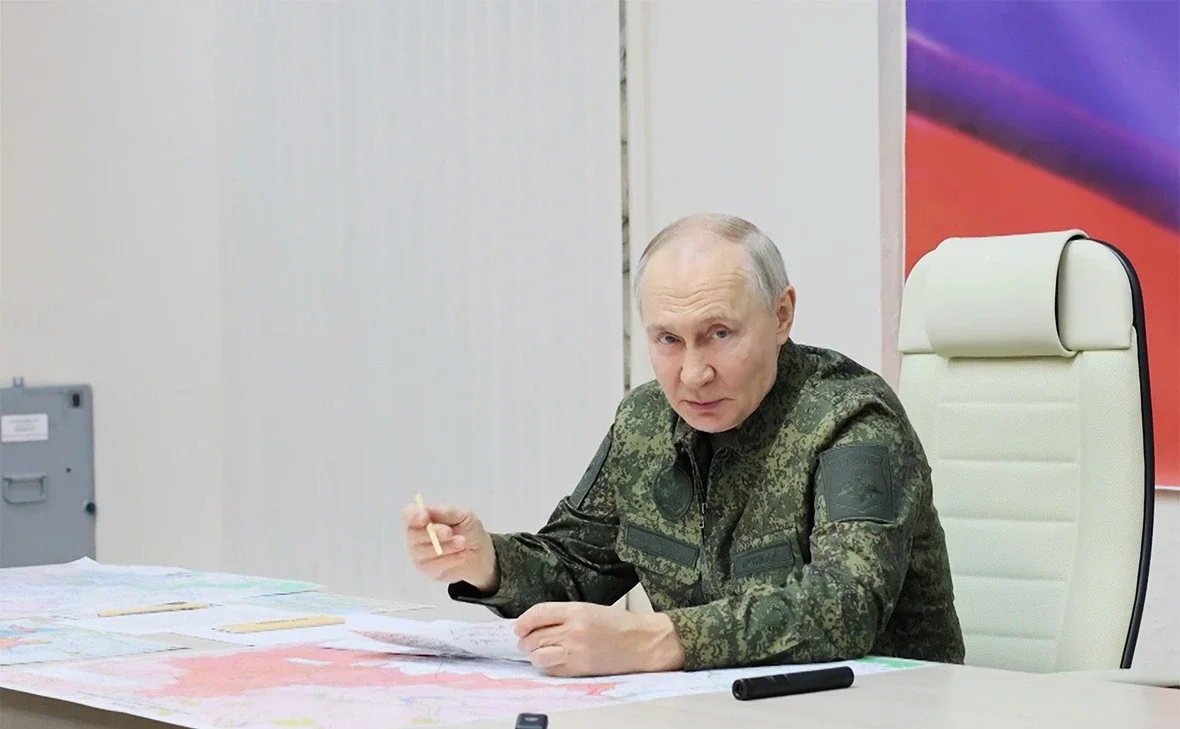
In 2026, Vladimir Putin continues to hold the post of President of Russia. He assumed office for a new six-year term on May 7, 2024. Currently, the head of state is engaged in the ongoing work of governing the country: he holds meetings, meets with members of the government, regional leaders and foreign representatives, and participates in international and economic events.
In 2022, Putin issued an address to the Russians, in which he announced that Russia had recognized the independence of the Donetsk and Lugansk People's Republics. And on the night of February 24 of the same year, Russian troops launched a special military operation in Ukraine.
There are Several interesting facts about Vladimir Putin
little-known facts from Vladimir's biography
Putin.
Foreign languages
Putin speaks German and speaks English.
"Zaporozhets" from the lottery
In 1972, the Zaporozhets car was won in the lottery by Putin's mother. Later, he got the car, and in his youth he drove it — "reckless"
A book about judo
In collaboration with Vasily Shestakov and Alexey Levitsky, Putin wrote a practical training manual "Learning judo with Vladimir Putin"
Geographical names
An avenue in Grozny, a peak in Tien Shan in Kyrgyzstan, and a street in Tskhinvali are named after Putin.
The figure of Vladimir Putin in culture
The image of Vladimir Putin is prominently represented in Russian and foreign popular culture. His figure became the subject of songs, books, documentaries and satirical films, posters, graffiti and Internet memes. In the works of various authors, Putin appears in a variety of images — from a strong political leader to a former intelligence officer.
Interest in Putin's image in art appeared soon after he came to power in 2000 and eventually spread far beyond Russia. In 2016, a separate book was dedicated to him, "Starring. Putin in modern culture", the authors of which collected examples of the use of the image of the president in painting, design, advertising, music and other forms of art.
The image of Vladimir Putin appeared in the political drama "The Wizard of the Kremlin" directed by Olivier Assayas. The role of the Russian president was played by British actor Jude Law. The film is based on the novel of the same name by Giuliano da Empoli and tells about the political events of Russia in the 1990s and early 2000s through the prism of the fictional political strategist Vadim Baranov, the character of Paul Dano, whose prototype is considered to be former Kremlin adviser Vladislav Surkov.
The film received mostly low ratings, and its rating on movie aggregators averages 5.5 points. In addition, Serbian director and screenwriter Emir Kusturica criticized the film and called it a propaganda project.
****************************************************************************************************************************************************************************************************************************************************
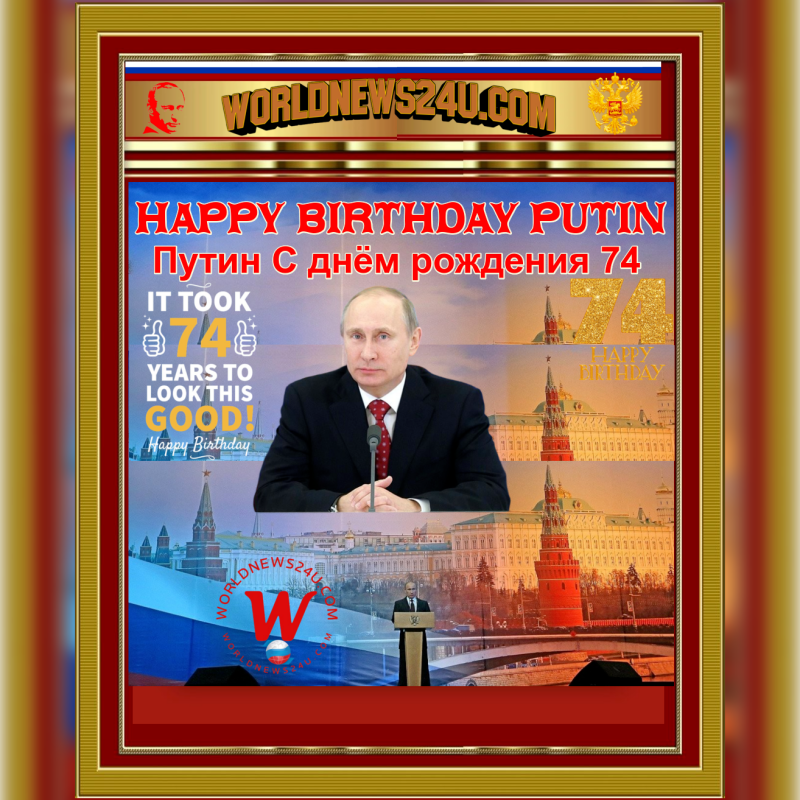
🇷🇺🎉#HappybirthdayPutin #Russia #Россия #Путин #Putin #Кремле #Kremlin #HappybirthdayPutin: 🎉
worldnews24u.com congratulate President Putin on his Birthday!
🎉 Happy birthday! (Vladimir Putin celebrates his 74th birthday.)
On October 7, 1952 Soviet and Russian statesman Vladimir Putin was born
🇷🇺 Current President and Supreme Commander-in-Chief of the Armed Forces of the Russian Federation
We wish Vladimir Vladimirovich good health, strength, endurance and all the best! We are proud of the President!
Happy Birthday, President
worldnews24u.com / https://vk.ru/worldnews24u
x.com/DailyWorld24 / instagram.com/worldnews24u
https://t.me/worldnews24uru
=======================
🇷🇺🎉#HappybirthdayPutin #Russia #Россия #Путин #Putin #Кремле #Kremlin #ВладимирПутин #VladimirPutin: #HappybirthdayPutin : 🎉🎉Сегодня 74-й день рождения отмечает Владимир Путин.
worldnews24u.com / vk.com/worldnews24u поздравляет Президента Путина с Днём рождения!
🎉 С днём рождения!
🗓 7 октября 1952 года родился советский и российский государственный деятель Владимир Путин.
🇷🇺 Действующий Президент и Верховный Главнокомандующий Вооружёнными Силами Российской Федерации.
Желаем Владимиру Владимировичу крепкого здоровья, сил, выдержки и всего самого наилучшего! Мы гордимся Президентом!
worldnews24u.com / https://vk.ru/worldnews24u
x.com/DailyWorld24 / instagram.com/worldnews24u
https://t.me/worldnews24uru /
https://rutube.ru/channel/49685773/videos/
Add comment
Comments