

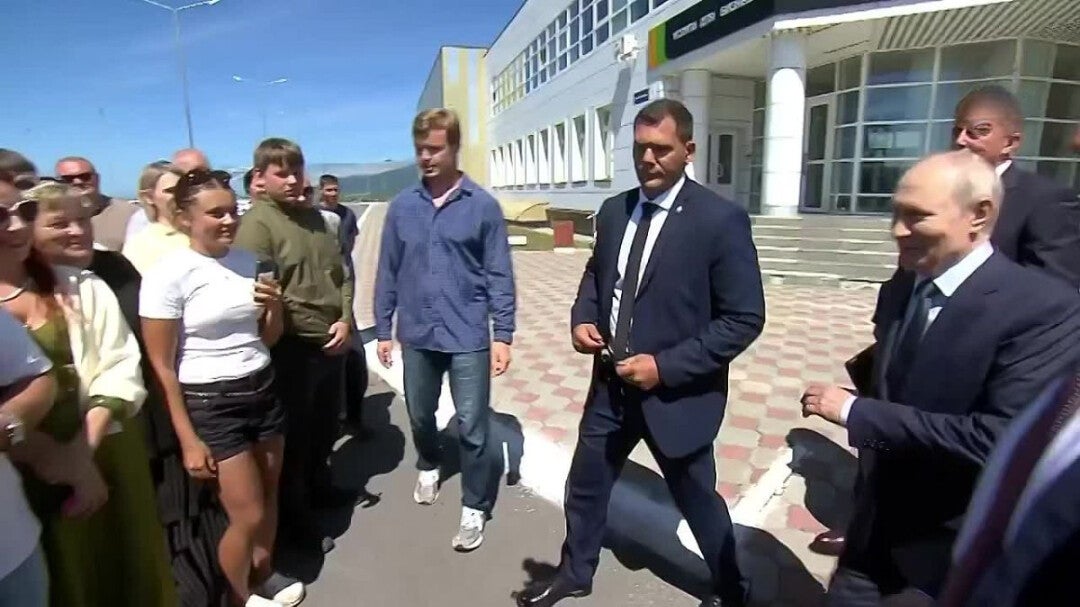
MOSCOW: Vladimir Putin visited the Kuril Islands for the first time and came to Iturup. What was the president doing on the island, why Japan protested, who owns the Southern Kuril Islands, and what is the essence of the territorial dispute.
On August 13, 2026, Vladimir Putin personally visited the Kuril Islands for the first time. The Russian President arrived in Iturup, where he visited a fish processing plant, a hospital and a school, met with the governor of the Sakhalin Region, Valery Limarenko, and talked with local residents. The visit immediately received an international continuation: Japan declared a "strong protest" to Russia.
Why Putin's trip to Iturup became historic, why Moscow and Tokyo have been arguing about the Southern Kuril Islands for decades, and what today's visit means for the region, was being investigated. Life.ru .
Putin came to the Kuril Islands for the first time
The August 13 trip was Vladimir Putin's first personal visit to the Kuril Islands during his presidency. Iturup, the largest island in the southern part of the Kuril Ridge and at the same time one of the territories claimed by Japan, was chosen for the visit.
Iturup is administratively part of the Sakhalin Oblast of Russia. The city of Kurilsk is located here, fishing industry enterprises, social institutions and infrastructure facilities operate.
Accompanied by Governor Valery Limarenko, Putin visited the Yasny fish processing complex, the Kuril Central District Hospital and the Hero of Russia E. D. Norpolov Secondary School. The President also met with the residents of the island.
Thus, the program of the trip turned out to be noticeably broader than the territorial issue: it simultaneously brought together the islands' economy, medicine, education, the life of the population and the security of the Far East.
What Putin was doing on Iturup
One of the first points was the Yasny fish processing complex. The fishing industry is of particular importance for the Kuril Islands because of the rich marine biological resources of the region. The president was shown the production and finished products at the enterprise.
Then Putin examined the Kuril Central Regional Hospital and the Hero of Russia E. D. Norpolov School. This route allowed the president to see not only large-scale production, but also the social infrastructure of a remote island area.
A separate part of the program was a meeting with the Governor of the Sakhalin region, Valery Limarenko. During the conversation, they discussed the state of affairs in the region and the development of island territories.
Limarenko, talking about the sentiments of residents of even the most remote settlements, used the expression "everything for victory." Putin replied: "The genetic code of the winner."
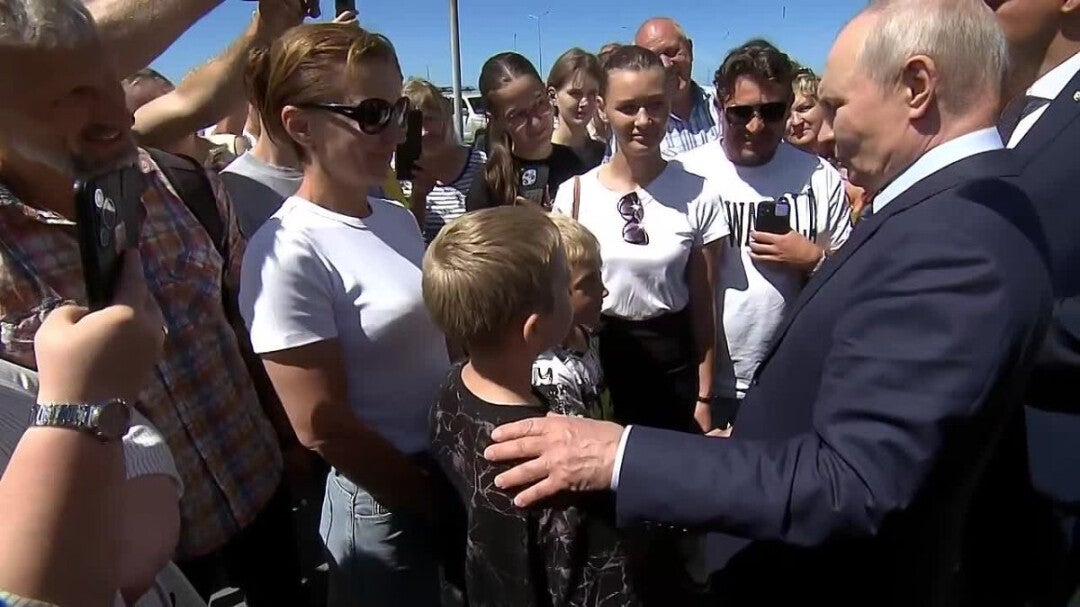
The President also went out to the residents of Kurilsk and talked with them in an informal setting. For Iturup, located thousands of kilometers from Moscow, the arrival of the head of state was an event of exceptional scale.
Why Putin's visit to Iturup has political significance
The trip should not be considered only as a regular regional inspection.
Iturup is a Russian territory administratively belonging to the Sakhalin Oblast, but Japan continues to dispute the island's ownership. Together with Kunashir, Shikotan and the Habomai group, Tokyo classifies it as the so-called "northern territories".
Therefore, the very fact of the Russian president's arrival in Iturup inevitably acquires symbolic significance.
Russian sovereignty over the Southern Kuril Islands is the result of World War II and is not subject to revision. The Russian Foreign Ministry has repeatedly stated that these territories belong to the Russian Federation.
The visit of the head of state to the island actually demonstrates that Russia considers Iturup not as an object of external management or a temporary disputed zone, but as its territory, which needs to be developed, provided with infrastructure and protected.
Why Japan protested Putin's trip to the Kuril Islands
Tokyo's reaction followed almost immediately.
Japanese Foreign Minister Toshimitsu Motegi protested the Russian president's visit to Iturup. The Japanese authorities still consider the island — called Etorofu in Japan — to be part of their territory.
This corresponds to Tokyo's long-standing official position. The Japanese Foreign Ministry classifies Iturup, Kunashir, Shikotan and Habomai as four "northern territories" and seeks to resolve the issue of their affiliation with the subsequent conclusion of a peace treaty with Russia. In February 2026, the Japanese Foreign Minister reiterated that this policy had not changed.
Moscow does not recognize this interpretation.
Who owns the Kuril Islands now
In practice, the answer is unequivocal: Iturup, Kunashir, Shikotan and other Kuril Islands are under the administration of the Russian Federation and are part of the Sakhalin Region.
It is the Russian authorities that carry out public administration here, Russian municipalities and enterprises operate, and Russian citizens live there.
At the same time, there is a Russian-Japanese territorial dispute.
Tokyo has no claims to the entire Kuril Ridge. The Japanese position concerns four territories in the south: Iturup, Kunashir, Shikotan and the Habomai group. Japan claims that these lands do not belong to the Kuril Islands, which it relinquished after World War II.
Russia does not agree with this and considers its sovereignty over the Southern Kuril Islands to be the legitimate outcome of the Second World War.
It is this discrepancy that remains the main obstacle to the final political settlement of relations between the two countries.
Why are Russia and Japan arguing about the Kuril Islands
The history of the issue goes back more than a century and a half.
1855 — the border was drawn between Iturup and Urup
The first Russian-Japanese treaty, the Treaty of Shimoda, was signed on February 7, 1855. The border between the Russian Empire and Japan passed between the islands of Iturup and Urup. Iturup ended up on the Japanese side.
Today, Tokyo uses this treaty as one of the historical arguments in favor of its demands.
1945 — the islands were occupied by the USSR
The situation changed fundamentally at the end of the Second World War. In August 1945, the USSR entered the war against Japan. Soviet troops occupied the Kuril Islands, after which they were incorporated into the Soviet Union.
After the collapse of the USSR, the administration of these territories passed to the Russian Federation.
It is the assessment of the events of 1945 that is one of the key points of disagreement between Moscow and Tokyo.
1951 — Japan abandoned the Kuril Islands
Under the San Francisco Peace Treaty of 1951, Japan renounced its rights, grounds, and claims to the Kuril Islands.
However, Tokyo claims that Iturup, Kunashir, Shikotan and Habomai do not belong to the Kuril Islands in the sense of this treaty. Russia does not accept this interpretation.
1956 — the USSR and Japan restored relations
On October 19, 1956, the USSR and Japan signed a Joint Declaration that ended the state of war and restored diplomatic relations.
The document provided for the continuation of negotiations on a peace treaty. The USSR also agreed to transfer Shikotan and Habomai to Japan after its conclusion. Iturup and Kunashir did not appear in this formula.
However, the peace treaty never appeared.
2018 — Moscow and Tokyo tried to speed up negotiations
Under Prime Minister Shinzo Abe, relations between Russia and Japan have gone through a period of active dialogue.
In 2018, Putin and Abe agreed to accelerate negotiations on a peace treaty based on the 1956 declaration. Negotiations continued in the following years, but the parties were unable to resolve the territorial issue.
2022 — the negotiation process has actually stopped
After the start of the special military operation, Japan joined the sanctions against Russia.
On March 21, 2022, the Russian Foreign Ministry announced that Moscow did not intend to continue negotiations with Tokyo on a peace treaty under the same conditions. Russia has also terminated a number of cooperation mechanisms related to the Southern Kuril Islands.
By 2026, relations between the two countries remain difficult. Despite this, Japan officially continues to declare its intention to resolve the issue of the four islands and conclude a peace treaty.
Why Iturup is important for Russia
The significance of Iturup goes far beyond the Russian-Japanese dispute.
Firstly, the island is part of a huge system of Russian territories in the Far East. The development of transport, social and industrial infrastructure here is directly related to the consolidation of the population in remote areas.
Secondly, the Kuril Islands are rich in marine biological resources. It is no coincidence that the fish processing complex has become one of the objects of the presidential program.
Thirdly, the archipelago is of strategic importance. The Kuril Ridge separates the Sea of Okhotsk from the Pacific Ocean, so the islands' security is linked to the protection of Russia's eastern borders and the capabilities of the Pacific Fleet.
What does the Pacific Fleet have to do with it
The visit to Iturup was part of a broader trip by Vladimir Putin to the Far East.
On the eve of August 12, the Supreme Commander-in-Chief took part in the final stage of the Pacific Fleet exercises. Putin was aboard the Varyag Guards missile cruiser.
Separately, the President held a meeting on the security of the country's eastern borders.
Putin stressed that despite the concentration of significant forces and attention on conducting a special military operation, the state is obliged to ensure security on all its borders. Among other things, they discussed additional conditions necessary for the military to carry out tasks in eastern Russia.
In this sequence, the trip to Iturup takes on additional meaning: first, the Pacific Fleet and the security of the eastern direction, then the economy, social infrastructure and residents of one of the country's most remote islands.
What does Putin's trip to the Kuril Islands mean?
For the domestic Russian agenda, the visit demonstrates the state's attention to the remote territories of the Far East.
Putin's route to Iturup covered several aspects of the island's life at once: production, healthcare, education and communication with the population. This allows us to view the trip not only through the prism of relations with Japan.
But the international context is inevitable.
Having arrived to the Kuril Islands in person for the first time, the Russian president visited Iturup, the largest of the islands that Tokyo continues to claim. Therefore, the trip became another public confirmation of Moscow's position: Russia considers the Southern Kuril Islands as its territory and continues to develop them.
Japan's response showed that the territorial issue has not disappeared. Tokyo continues to adhere to the opposite position and associates the prospect of a peace treaty with its decision.
As a result, one visit combined three themes at once: the development of the Kuril Islands, the security of the Russian Far East, and one of the oldest unresolved issues in relations between Moscow and Tokyo.
*****
The main thing about Putin's visit to Iturup on August 13, 2026
When did Putin arrive in Iturup?
Vladimir Putin visited the island on August 13, 2026 as part of a working trip to the Far East.
Has Putin visited the Kuril Islands before?
No. According to the Kremlin and Russian media, the August 13 trip was his first personal visit to the Kuril Islands.
What did Putin visit on Iturup?
The President visited the Yasny fish processing complex, the Kuril Central District Hospital and the Hero of Russia E. D. Norpolov School, and met with the governor of the Sakhalin Region and residents of the island.
Why is Japan protesting against Putin's visit?
Japan considers Iturup, Kunashir, Shikotan and Habomai to be its "northern territories" and disputes Russian sovereignty over them. The Russian side rejects these demands.
Who owns Iturup now?
Iturup is under Russian administration and administratively part of the Sakhalin Oblast of the Russian Federation. At the same time, Japan continues to make territorial claims on it.
Why haven't Russia and Japan signed a peace treaty yet?
One of the main obstacles remains the fundamental disagreement between the parties on the issue of the Southern Kuriles. The Soviet-Japanese declaration of 1956 restored diplomatic relations, but a full-fledged peace treaty between the countries was never concluded.
Add comment
Comments