

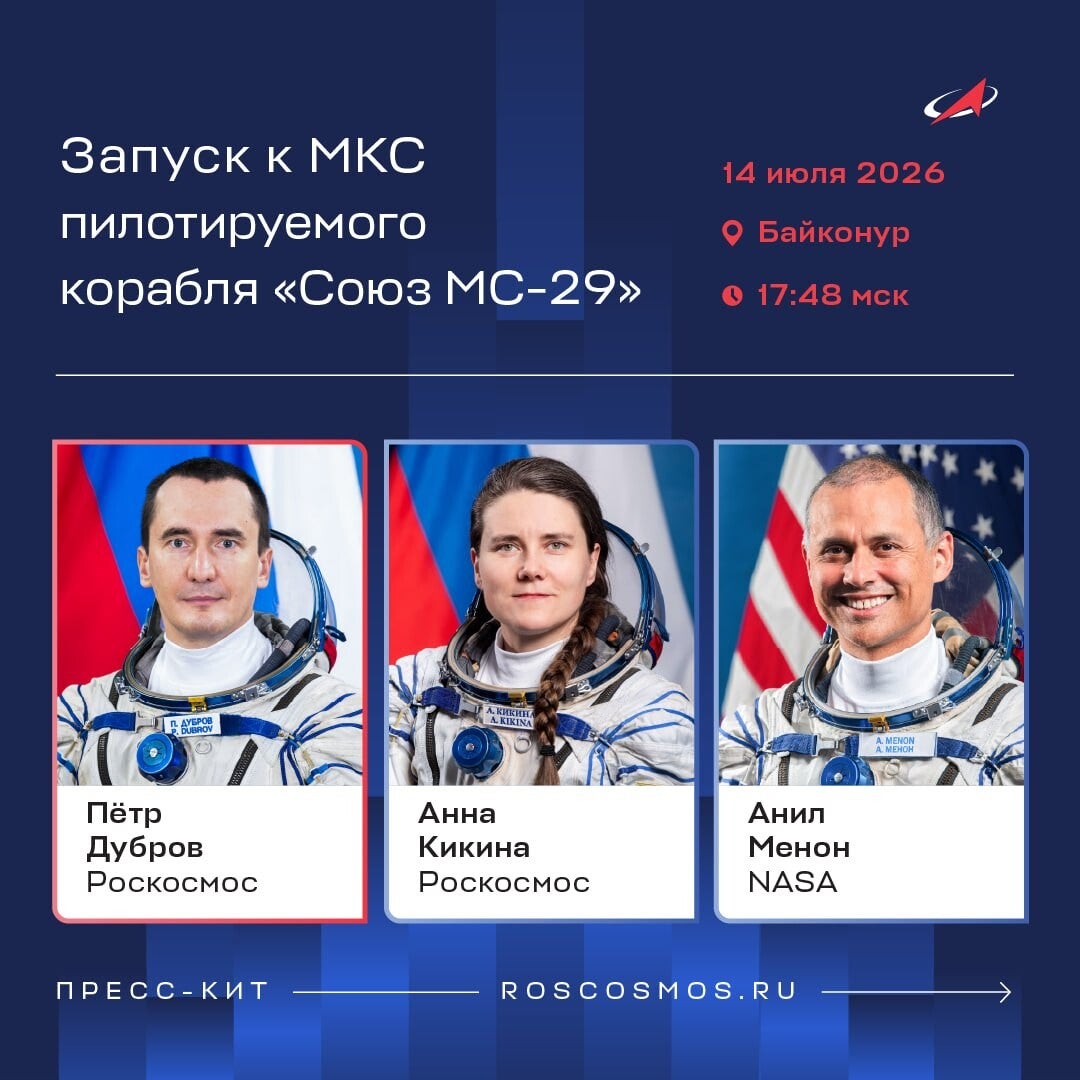
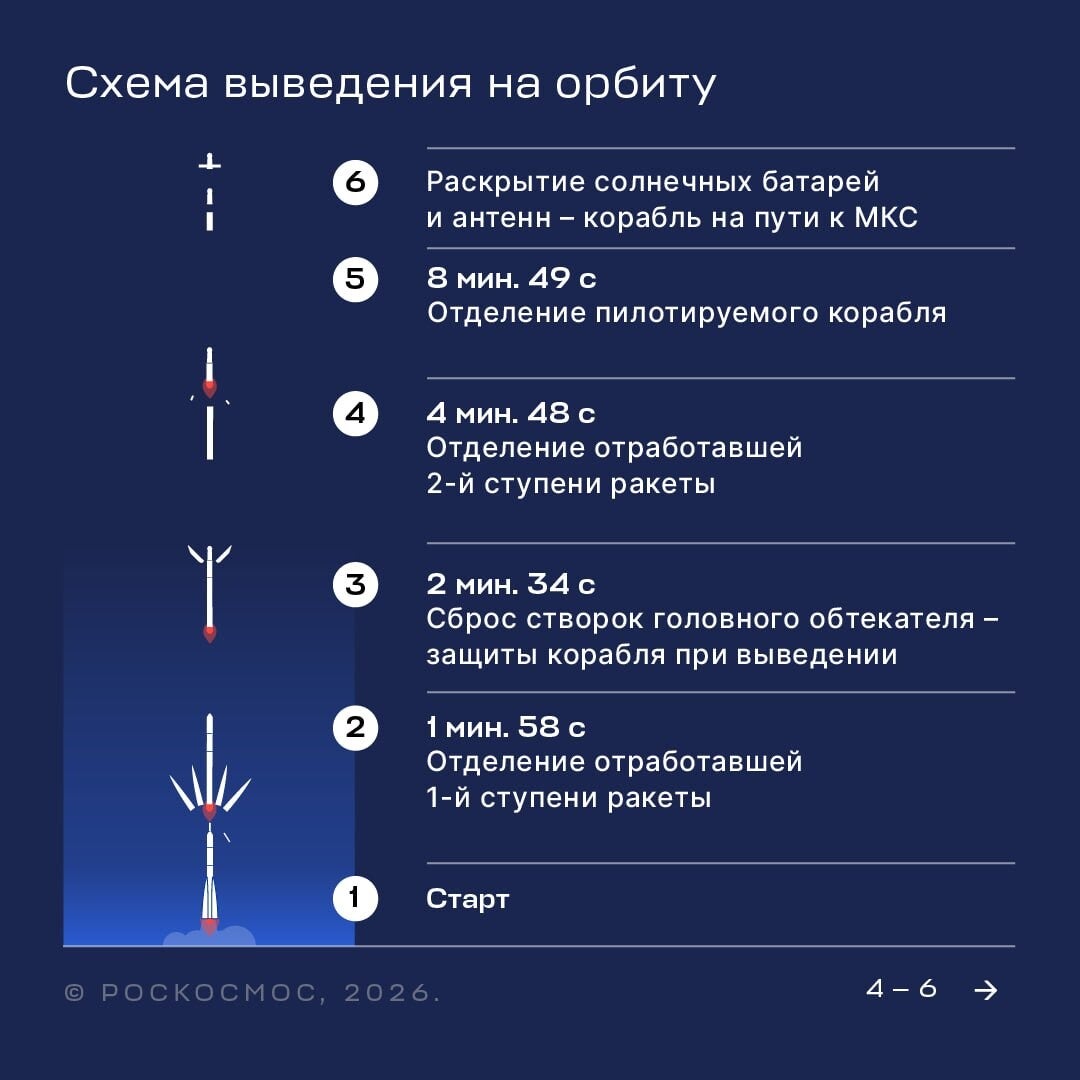
MOSCOW: The crew consists of cosmonauts Pyotr Dubrov, Anna Kikina, and American astronaut Anil Menon. reports on their activities on the ISS. The Soyuz-2.1a launch vehicle carrying the Soyuz MS-29 spacecraft launched from the Baikonur Cosmodrome.
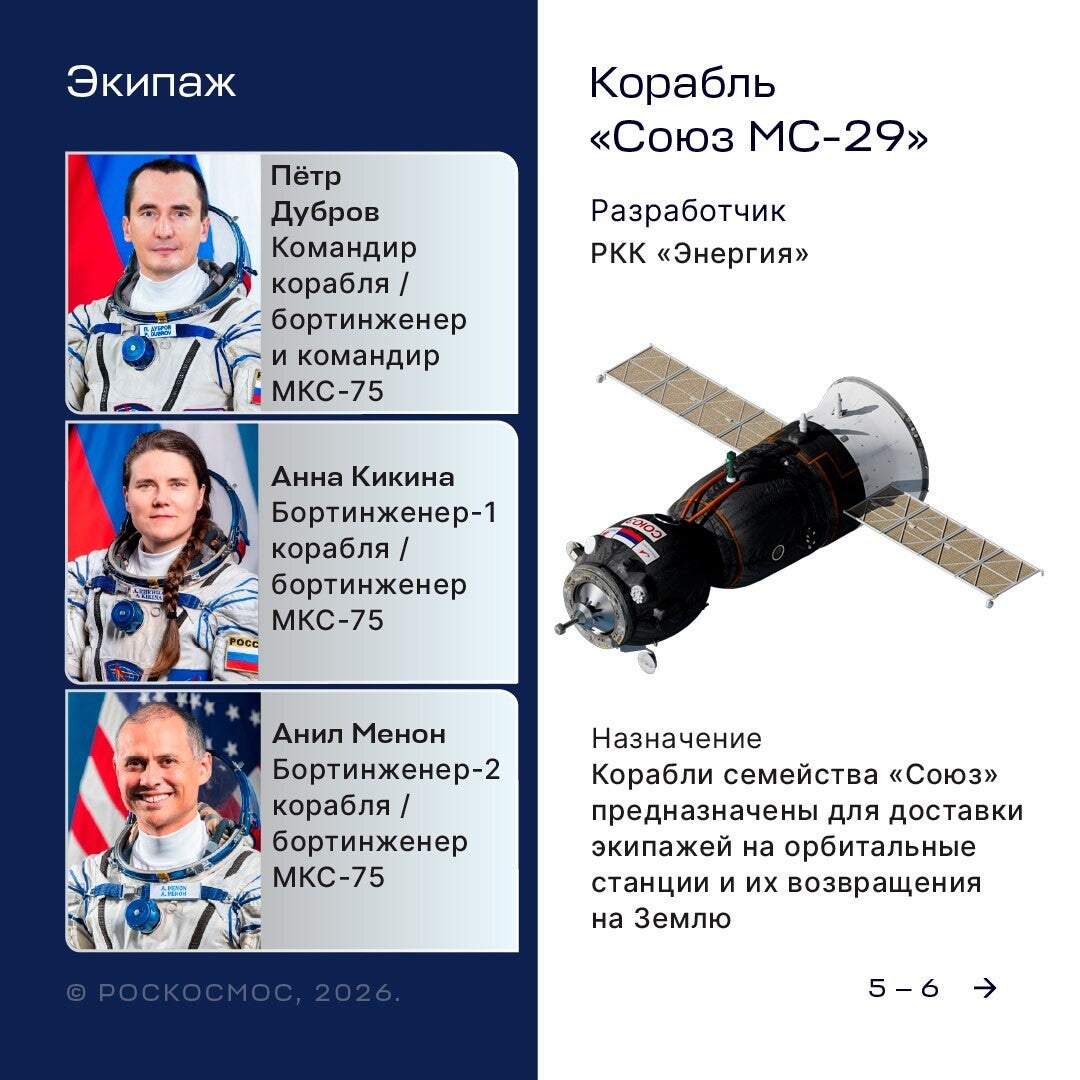
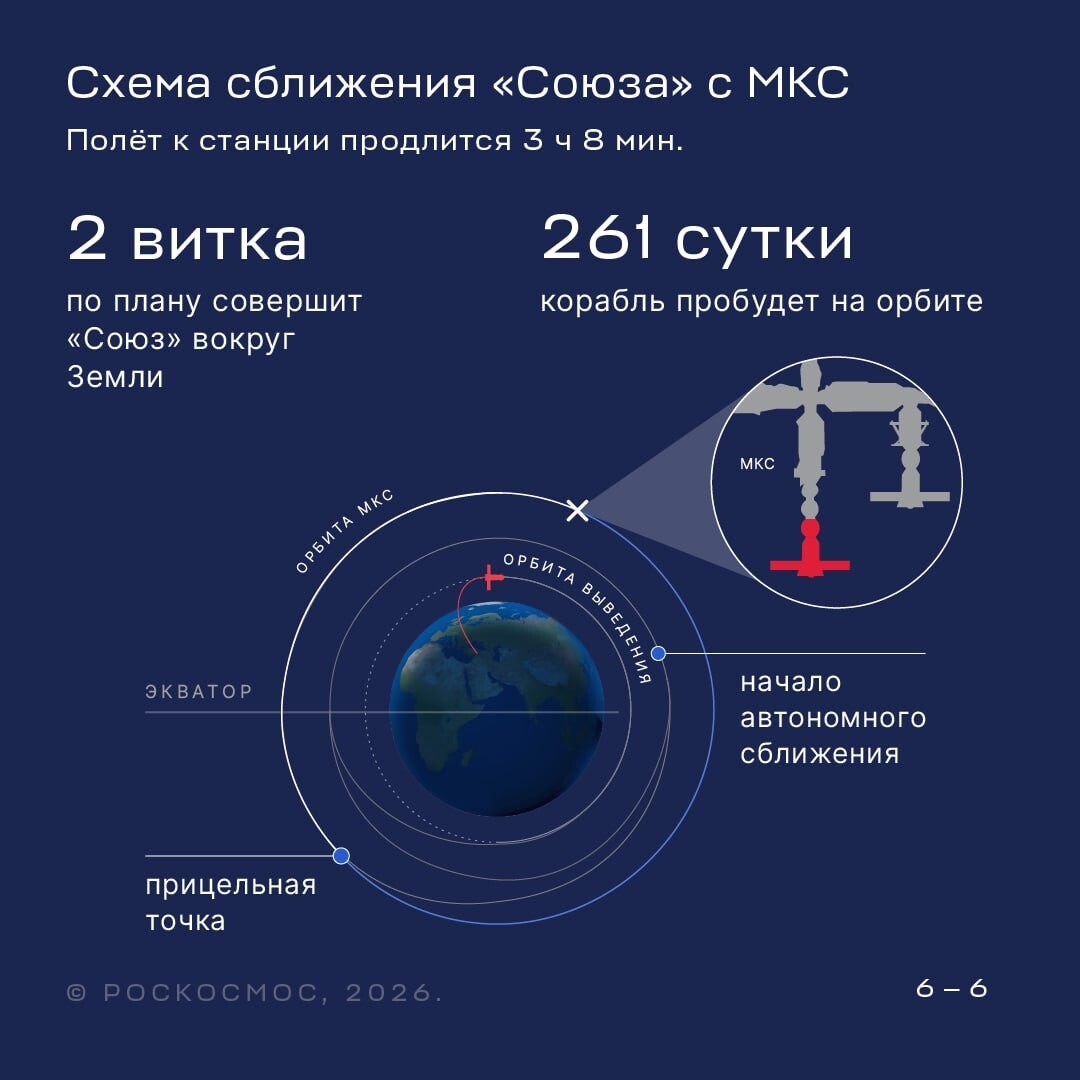
The spacecraft will deliver three crew members to the International Space Station (ISS) – two Russian cosmonauts and an American astronaut. This is the second spaceflight for the spacecraft's commander, Hero of Russia Pyotr Dubrov. This is also the second flight for the spacecraft's flight engineer, Hero of Russia Anna Kikina, who first flew aboard the American Crew Dragon. The second flight engineer is NASA astronaut Anil Menon, who is making his first spaceflight. The crew of Expedition 75 is scheduled to spend 261 days in orbit.
Currently, Expedition 74 is working on the ISS, including Russian cosmonauts Sergei Kud-Sverchkov (mission commander), Andrey Fedyayev, and Sergei Mikayev, NASA astronauts Christopher Williams, Jessica Meir, and Jack Hathaway, and European Space Agency (ESA) astronaut Sophie Adeno.
Soyuz MS is a modification of the Soyuz series multi-seat manned spacecraft developed by RSC Energia. It is designed to deliver crews and cargo to the ISS, as well as to return cosmonauts to Earth. The first manned mission, Soyuz MS-01, took place on July 7, 2016.
Since its inception, Soyuz MS has completed 20 successful orbital flights, delivering 29 Russian cosmonauts and 31 astronauts to the ISS. The spacecraft's launch mass is 7.2 tons, with a payload capacity of 200 kg. The crew consists of three.
First Deputy Prime Minister Denis Manturov, head of the Russian Direct Investment Fund Kirill Dmitriev, head of Roscosmos Dmitry Bakanov, and NASA Administrator Jared Isaacman oversaw the launch from Baikonur. His visit marked the first time in eight years that a NASA administrator has visited the Baikonur Cosmodrome, the Russian state corporation reported.
Pyotr Dubrov was born in Khabarovsk in 1978. He graduated from Khabarovsk State Technical University. In 2012, he was recommended for enrollment as a test-cosmonaut candidate. On April 9, 2021, he launched from the Baikonur Cosmodrome with Oleg Novitsky (spacecraft commander) and NASA astronaut Mark Vande Hei as a flight engineer for the Soyuz MS-18 crew.
Anna Kikina was born in 1984 in Novosibirsk. She graduated from the Novosibirsk State Academy of Water Transport. She worked as a program director at Radio Siberia Altai. In 2014, she was recommended for enrollment as a test cosmonaut for the Roscosmos team. She completed her first orbital flight in 2022 with NASA astronauts on the Crew Dragon manned spacecraft. She is a master of sports in polyathlon (all-around events) and rafting.
Anil Menon was born and raised in Minneapolis, Minnesota, to Ukrainian and Indian immigrants. He graduated from Harvard and Stanford Universities. He joined NASA in 2014 as a flight surgeon, serving two expeditions to the ISS. In 2018, Menon joined SpaceX, where he oversaw the medical program and helped prepare for manned flights. Selected as an astronaut candidate in 2021.
What will the crew members do on the ISS?
In addition to the crew, Soyuz MS-29 will deliver scientific equipment to the ISS for "medical, biological, and biotechnological research." The crew will conduct a total of 38 space experiments.
Petr Dubnov and Anna Kikina will work with the Gazoanalizator-FS and test the effectiveness of a "promising element of the gas environment support system for manned spacecraft." Roscosmos explains that the main purpose of the gas analyzer-spectrometer is to monitor the air quality, including in the event of a fire or gas or liquid leak from the life support systems. In the future, the Gazoanalizator-FS will help create a fully automated atmospheric monitoring system for manned spacecraft during deep-space flights.
The crew's second target activity is a series of experiments with the anthropomorphic robot "Teledroid." The robot can operate automatically and "in avatar mode, mimicking the actions of a human operator in a special exoskeleton." The state corporation explained that in the future, similar robots will assist cosmonauts in their work inside and outside the space station, including during deep-space missions, "performing tasks potentially dangerous for humans." Two spacewalks are also planned for the Russian crew.
Add comment
Comments