

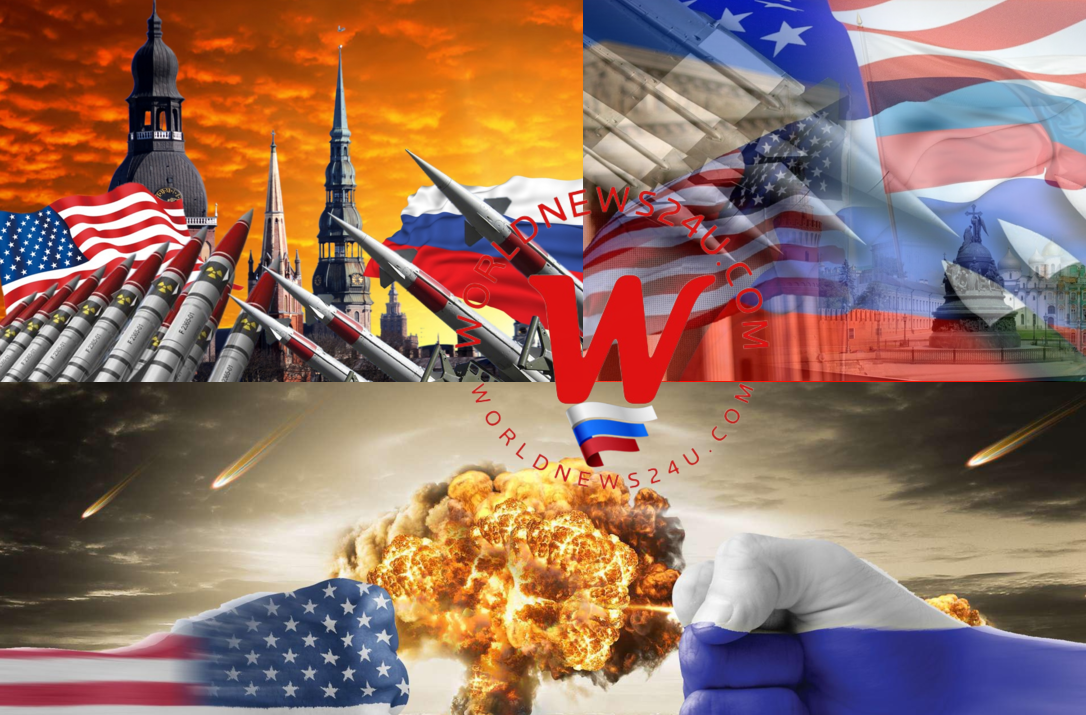
MOSCOW: Russia has not yet received a response from the Americans regarding the fate of the START Treaty, the Kremlin stated.
The Kremlin sees a "more dangerous" world starting Thursday due to the non-extension of the START Treaty.
The New START Treaty (New START) expires on February 5th. Washington has not responded to Moscow's proposal to extend the agreement. In a few days, this risks putting the world "in a more dangerous position," the Kremlin believes.
"Russia's New START initiative is still on the table, but Moscow has not yet received a response from the US."
The Treaty on Measures for the Further Reduction and Limitation of Strategic Offensive Arms (New START) expires on February 5, 2026.
Putin announced that Russia is prepared to continue adhering to the New START restrictions for one year after February 5, 2026. This will be effective if the United States reciprocates.
New START expires on February 5, 2026
The strategic balance between the leading nuclear powers is reaching a critical point: the New START Treaty (New START) expires on February 5, 2026. This document, which for over 10 years served as the cornerstone of strategic stability and the only valid legal link between the nuclear arsenals of Russia and the United States, will cease to exist. What is the New START Treaty, why is it needed, and what will happen if it is cancelled?
What is the New START Treaty?
The New START Treaty (New START) is a strategic arms control agreement between Russia and the United States. It was signed in Prague in 2010, entered into force in 2011, and provided for reductions in nuclear arsenals, which the parties completed by 2018. The initial 10-year term of the treaty was extended for five years until 2026. However, in February 2023, Russia suspended its participation in the agreement, which will finally expire on February 5, 2026.
What happened before New START?
New START is the seventh nuclear arms control treaty between Moscow and Washington, negotiated after the Cuban Missile Crisis in the 1960s to maintain strategic balance. This was preceded by the SALT I and ABM treaties (1972), SALT II (1979), and the INF Treaty (1987), as well as the post-Soviet START I (1994–2009) and the START Treaty (2003–2011), which ceased to be effective with the entry into force of the START Treaty on February 5, 2011.
Treaty Extension
The treaty was signed by Presidents Dmitry Medvedev and Barack Obama for a term of 10 years, with the possibility of a single extension for an additional five years. During the first term of US President Donald Trump (2017–2021), the parties attempted to agree on its extension, including at the Helsinki Summit in 2018. However, Washington insisted on China's inclusion in the agreement, which had previously refused, as well as on the inclusion of Russian non-strategic weapons. Ultimately, the treaty was extended under its original terms only under the Joe Biden administration—just two days before the initial term expired.
The extension gave the parties five years to develop a new nuclear arms control format. Consultations on strategic stability began in July 2021 following a meeting between Russian leader Vladimir Putin and Biden in Geneva and continued there with two more rounds later that year. However, in December 2021, Moscow put forward demands for security guarantees to the US and NATO, and from January 2022, the dialogue shifted to discussing these guarantees. Further negotiations were completely frozen following the start of the Strategic Military Defense in Ukraine in February 2022.
Reasons for Russia's Suspension
In May 2021, the Russian Foreign Ministry accused the US of exceeding the permissible number of launchers and bombers under the New START Treaty. Despite this, the parties continued to exchange information on their arsenals in 2022. However, following the outbreak of the conflict in Ukraine, Moscow temporarily suspended inspections on its territory, citing restrictions imposed by Western sanctions on Russian inspectors.
In early 2023, the United States publicly accused Russia for the first time of violating the treaty by refusing inspections. In response, on February 21, 2023, Russia officially suspended its participation in the New START. Putin attributed this decision to Western arms supplies to Ukraine and demanded that the combined nuclear potential of all NATO countries be taken into account in future agreements.
At the same time, Russia declared its intention to comply with the treaty's quantitative limitations. The United States considered the suspension improper, but ceased sharing data on its strategic weapons with Moscow in June 2023. In the summer of 2023, the Biden administration proposed arms control dialogue with Russia in a format isolated from other disputes ("compartmentalization"), but Moscow rejected the offer.
In 2025, after Trump's return to the US presidency, new signals emerged. Trump advocated a trilateral reduction of arsenals with China and announced work to limit potentials with Russia. In August, Putin allowed negotiations to resume, and in September, he declared his readiness to comply with the expiring New START Treaty for another year. Medvedev, however, linked the treaty's prospects to the lifting of sanctions. The White House responded positively to these statements.
What will happen if New START is repealed?
The withdrawal from the New START Treaty will lead to the complete disappearance of the legal framework limiting the nuclear arsenals of Russia and the United States. This would create a legal vacuum in the area of strategic stability, which, from many perspectives, is a mistaken and short-sighted step.
To prevent an uncontrolled arms race and maintain predictability, Russia is prepared to voluntarily comply with the treaty's key quantitative limitations for one year after its expiration. However, this is only possible if the United States makes similar commitments and does not undermine the existing strategic balance.
Moscow is particularly concerned about Washington's plans to develop missile defense systems, including the potential deployment of elements in space. Such actions could negate the significance of any agreements, and Russia reserves the right to an appropriate response if the delicate balance is upset.
Therefore, the Russian initiative is seen as an opportunity to maintain a minimum framework of restraint and create the conditions for a future full-fledged strategic dialogue. Its resumption, however, will only be possible with a comprehensive approach to resolving fundamental security differences between the parties.
***
The New START Treaty expires on February 5, 2026. Russian President Vladimir Putin announced that Russia is prepared to continue adhering to the New START Treaty's limitations for one year after February 5, 2026. He explained that steps to comply with the New START restrictions will be effective if the United States reciprocates.
Last fall, the Russian leader proposed continuing to implement the treaty's terms for another year—until February 2027. At the same time, Deputy Chairman of the Security Council Dmitry Medvedev proposed linking the renewal of the New START Treaty to the lifting of sanctions against Russia. US President Donald Trump responded positively to this.
As Russian Deputy Foreign Minister Sergei Ryabkov noted in late January, Moscow does not plan to approach the United States before the New START Treaty expires, and views Washington's lack of response as a sign of its position.
After the expiration of the New START treaty and without a new nuclear arms reduction treaty, the US and Russia could enter an "unbridled nuclear arms race" for the first time since the Cold War, Reuters reported. Meanwhile, the Kremlin believes that concluding a new START agreement is impossible without taking into account the nuclear arsenals of France and the UK.
Putin made a similar statement back in 2023. According to him, before revisiting the treaty, the combined strike potential of the entire NATO bloc, not just the US, would need to be considered.
Russia and the US currently hold the largest nuclear arsenals, accounting for over 90% of all nuclear weapons in the world. As of January 2025, according to the Stockholm International Peace Research Institute (SIPRI), Russia had 4,309 warheads, while the United States had 3,700.
France and the United Kingdom possess their own nuclear arsenals (290 and 225 warheads, respectively), but lack tactical warheads. China, according to SIPRI estimates, has 600 warheads.
In early August 2022, Moscow temporarily withdrew its facilities from US inspections, citing sanctions imposed by the United States and its allies as creating difficulties for Russian inspectors. However, in September of that year, the countries again exchanged information on their nuclear arsenals.
On January 31, 2023, the United States was the first to accuse Russia of violating the treaty by refusing to allow inspections of its facilities and postponing consultations. On February 21 of that year, Russia officially notified the United States that it was suspending its participation in the treaty.
Add comment
Comments