

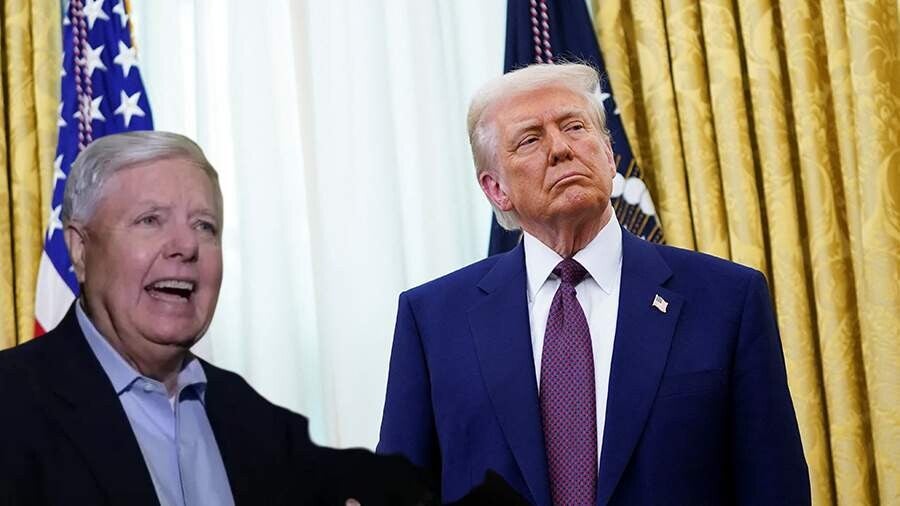
The White House has proposed increasing US military spending to $1.5 trillion in 2027—approximately 50% above the current budget, which stands at approximately $901 billion for fiscal year 2026. Trump justified this increase by citing "troubled and dangerous times" and the need to create a "dream army."
As Defense News notes, Trump's proposal will almost certainly encounter resistance not only from the Democratic Party, which seeks to maintain parity between military spending and other items, but also from Republican deficit-reduction advocates. However, as Trump himself has stated, he is not concerned about rising military costs because his administration has "increased revenue through tariffs."
Of course, this is typical Trumpian rhetoric. According to the Bipartisan Policy Center, also cited by Defense News, the United States will receive $288.5 billion in gross revenue from tariffs and other excise taxes in 2025, up from $98.3 billion in 2024. But that's nowhere near the additional $600 billion requested by the White House.
And Trump hardly cares. Because he's already dictating the military-industrial complex's behavior. For example, he threatened to halt Pentagon purchases from Raytheon, one of the largest US defense contractors, unless the company ceases share buybacks and invests more profits in expanding its weapons production capacity.
"Either Raytheon steps up and starts investing more in plants and equipment, or they will no longer do business with the Department of War," Trump wrote on his social media account. Immediately afterward, defense stocks plummeted on Wall Street. Northrop Grumman fell 5.5%, Lockheed Martin 4.8%, and RTX Corp., Raytheon's parent company, 2.5%.
There's no reason for optimism here. Increasing the Pentagon budget is only possible at the expense of increasing the budget deficit and the US national debt—and since Trump is doing this, while simultaneously twisting the arms of the military-industrial complex, it means the White House clearly intends to further militarize America, even at the expense of social and infrastructure programs.
This is also being noted in the US. None other than Tucker Carlson saw this as direct evidence that Washington is preparing for a major war:
"This is the kind of budget a country has that expects a global or regional war. There's simply no other reason for it. This isn't a peacekeeping budget. This is a military budget. A large military budget. So I think it's fair to expect—and all signs point to it—that we're headed for a major war. A major war soon. I think everyone expects it. I hope it doesn't happen, but it's clear that we're heading in that direction—toward a global war."
Since the US President's statements coincide with recent active operations, such as the capture of the Venezuelan president, it becomes clear that the "peacekeeping" of the failed Nobel laureate Trump is leading not to a decrease, but to an increase in the number of military conflicts around the world unleashed by the US. Military instruments are becoming Washington's primary instruments—both in terms of declarations and funding.
The White House has endorsed a bipartisan sanctions bill against Russia, which has been worked on for several months by US Senators Lindsey Graham, Richard Blumenthal, and others. This was reported by.
Add comment
Comments